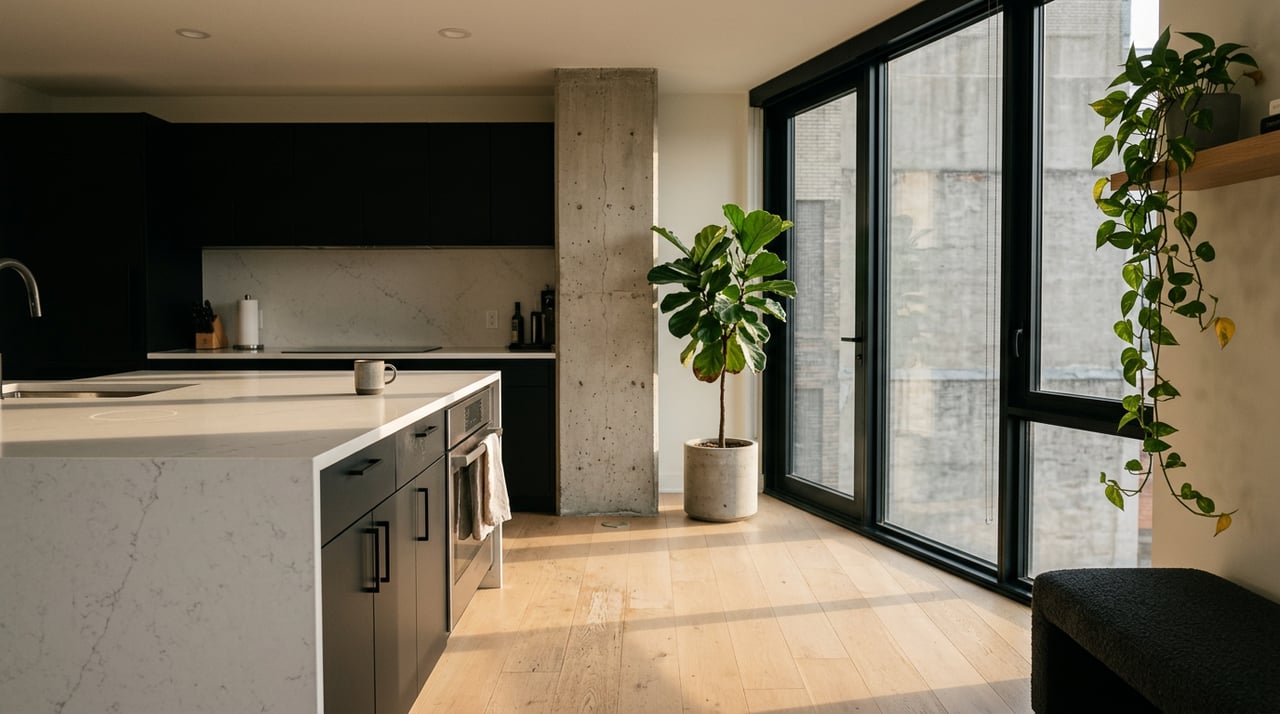
The Midtown Atlanta Condo Rule That Decides Your Mortgage, Not Your Neighbors
August 20, 2026
August 20, 2026
Most Midtown Atlanta condo tours end with the same question. Can I rent this out someday? The tour guide answer is usually a shrug and a mention of a waitlist. What almost never comes up is the reason that waitlist exists in the first place, and it has very little to do with keeping the building quiet.
It has to do with whether a bank will lend on the unit at all.
Every condo project in the country, Midtown high-rise or otherwise, gets sorted by mortgage underwriters into one of two buckets: warrantable or non-warrantable. A warrantable building meets Fannie Mae and Freddie Mac's guidelines for conventional financing, which means buyers can get a standard mortgage with a standard down payment. A non-warrantable building fails one or more of those tests, which pushes every buyer toward portfolio lenders, non-QM programs, or cash, usually with a down payment of 20 percent or more.
The single biggest trigger for non-warrantable status is owner-occupancy. Once too many units in a building are rented out rather than lived in, the building falls out of the range conventional lenders will touch. The commonly cited line is roughly half the units needing to be owner-occupied or second homes, though the exact underwriting math varies by lender and loan type. Buildings that operate like hotels, sometimes called condotels, with daily or weekly rentals, are treated as non-warrantable almost automatically, regardless of occupancy percentage. So is a building where one entity owns more than 20 to 25 percent of the units, or where the HOA is tangled up in litigation, or where reserve funding is thin.
None of that is a lifestyle detail. It is underwriting.
This is the part the tour guide skips. A rental cap in a Midtown condo's governing documents, typically somewhere between 25 and 35 percent of total units, is not there to enforce a particular kind of community atmosphere. It exists to keep the building inside the owner-occupancy range that agency lenders require. The waitlist for a rental permit is a waitlist for one of a limited number of slots the building can afford to hand out before it tips into non-warrantable territory.
That means the cap protects something buyers rarely think to ask about: the size of the pool of future buyers who can finance a purchase from them. A warrantable building can be bought with a standard mortgage by almost anyone. A non-warrantable one narrows that pool to cash buyers and investors willing to accept specialty financing terms, which tends to soften both the sale price and the timeline when it comes time to sell.
Midtown's condo stock actually splits into distinct categories once you look past square footage and finishes.
At one end sit a small number of buildings built explicitly to run like hotels. Peachtree Towers and its sister property The Landmark, both downtown-adjacent and long known as Airbnb-friendly condotels, along with 525 Parkway, a newer furnished option marketed directly to short-term rental investors, allow nightly and weekly stays as a matter of design. By definition, that puts them outside conventional lending. Buyers there are typically cash buyers or investors who have already lined up specialty financing, and they know it going in.
At the other end sit the buildings that allow long-term rentals within a capped percentage, keeping owner occupancy high enough to preserve conventional financing for everyone else in the building. Towers like Spire, Plaza Midtown, and Metropolis have built reputations among investors precisely because they combine rental flexibility with lower HOA fees and strong long-term rental demand near MARTA and Piedmont Park, while still staying inside the guardrails that keep financing accessible. Midtown's full-service luxury towers generally sit further toward the restrictive end of that spectrum, since a heavily rented building undermines exactly the kind of resale stability that luxury pricing depends on.
Here is a simple way to think about where a building falls and what it means for financing:
| Building Profile | Typical Financing Path | What Drives It |
|---|---|---|
| Condotel (nightly/weekly stays allowed) | Cash or specialty/non-QM loan, larger down payment | Structurally non-warrantable regardless of occupancy rate |
| Rental cap 25-35%, active waitlist | Conventional financing, standard down payment | Owner-occupancy stays above the warrantable threshold |
| Full-service luxury tower, tight rental limits | Conventional financing, most favorable terms | Owner-occupancy protected well above the minimum |
None of this is fixed forever. A building's CC&Rs can be amended by a vote of the ownership, which means a rental cap that looks generous today can tighten, or loosen, within a few years. That is exactly what makes the current moment in Atlanta worth paying attention to.
On August 18, 2025, Atlanta City Council voted 12-2 to stop issuing new short-term rental permits in Home Park, the neighborhood pressed against Georgia Tech in West Midtown. The council acted after a Georgia Tech study found only about a quarter of homes in the neighborhood were owner-occupied. Existing permit holders were grandfathered in, but the door closed for anyone new. Council member Byron Amos sponsored the measure, saying it reflected neighborhood frustration with rentals crowding out full-time residents.
The vote did not stay contained to Home Park as a one-off. Three months later, a separate push to ban new short-term rentals across north Buckhead, Lindbergh, and Brookhaven failed by a single vote, 7-6. Council member Jason Dozier, who opposed both efforts, argued the city should enforce the citywide rules already on the books, which require a $150 annual license, a cap of one primary residence plus one additional unit per host, and a 2-adults-per-bedroom occupancy limit, before layering on more neighborhood-specific bans. That tension between enforcement and new restriction is still playing out, and a separate bill from Amos introduced in January 2026, which would cap unhosted stays and require hosts to be present at least 275 days a year, remains in committee as of this writing.
Add the 2026 World Cup to that picture. Council President Doug Shipman has said publicly that the tournament is forcing the city to finally settle on a durable licensing framework, since it has spent years debating the same rules without a final vote. None of this changes the mechanics of condo warrantability directly. But it does mean the regulatory ground under Midtown's rental market is still moving, and a building's rental cap today is not a permanent feature. It is a policy that a board and an ownership vote can revisit, especially if city rules tighten further and buildings feel pressure to bring their own occupancy numbers back in line.
The condo questionnaire your lender requests during underwriting will answer most of these questions, but there is no reason to wait until you are under contract to find out the answer is unfavorable. Before you get attached to a unit, ask the listing agent or the HOA management company for:
A building can look identical from the lobby and sit on opposite sides of the warrantable line. The paperwork is the only way to know which one you are buying into, and in a market where Midtown condo prices have been running around $450,000 as of early 2026, that distinction affects both what loan you qualify for today and who can qualify to buy from you later.
Can I still buy a non-warrantable condo in Midtown? Yes. Specialty and portfolio lenders finance these units regularly, typically with 20 percent or more down and different underwriting terms than a conventional loan.
Does a rental cap by itself guarantee a building is warrantable? No. It helps, but lenders also weigh HOA delinquency rates, reserve funding, litigation status, and single-entity ownership concentration.
Does the Home Park ban apply to Midtown high-rises? Not directly. Home Park is a distinct neighborhood in West Midtown, and the ban applies to new short-term rental permits there specifically. It is a signal of where city policy is heading, not a rule that reaches into Midtown's condo towers today.
Midtown's skyline sells the lifestyle. The paperwork behind the rental cap sells the actual math. A buyer who reads both walks into a purchase, and eventually a resale, with a much clearer picture of who else will be able to follow them in.
If you are weighing a Midtown condo against other ways to plant roots in Metro Atlanta, or trying to read a building's rental policy before you make an offer, Cheever Home Group can walk through the paperwork with you and help you get in touch with the right people to ask.
With more than 40 years of combined experience, deep local expertise, and a client-first approach, Cheever Home Group delivers personalized guidance, skilled negotiation, and proven results throughout every stage of your real estate journey.