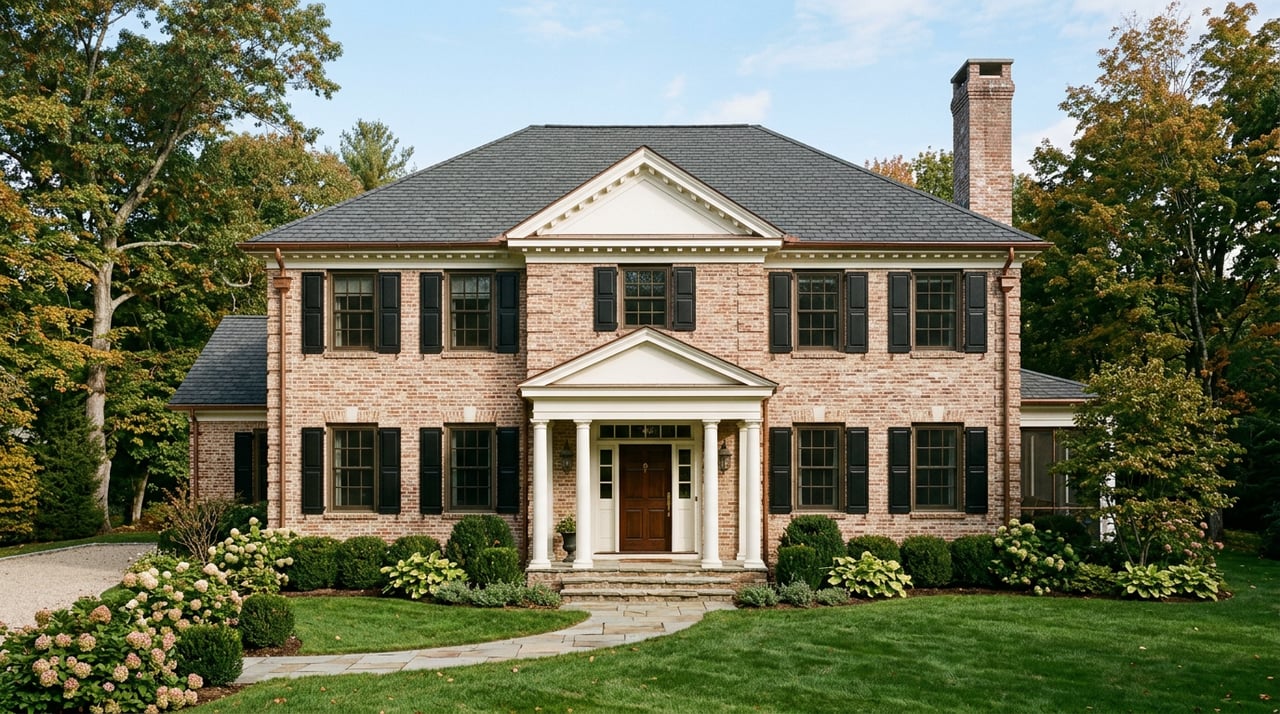
The Marietta Address on Your East Cobb Home Doesn't Pay Marietta's Taxes
September 3, 2026
September 3, 2026
Every relocation season, we get some version of the same phone call. A buyer has found a house they love. The listing says East Cobb. The mailing address says Marietta, Georgia. Naturally, they assume they're buying into the City of Marietta: Marietta police, Marietta schools, Marietta's tax rate. Then closing paperwork or a first tax bill shows something that doesn't match what they expected, and they call us confused about which government actually has jurisdiction over their new home.
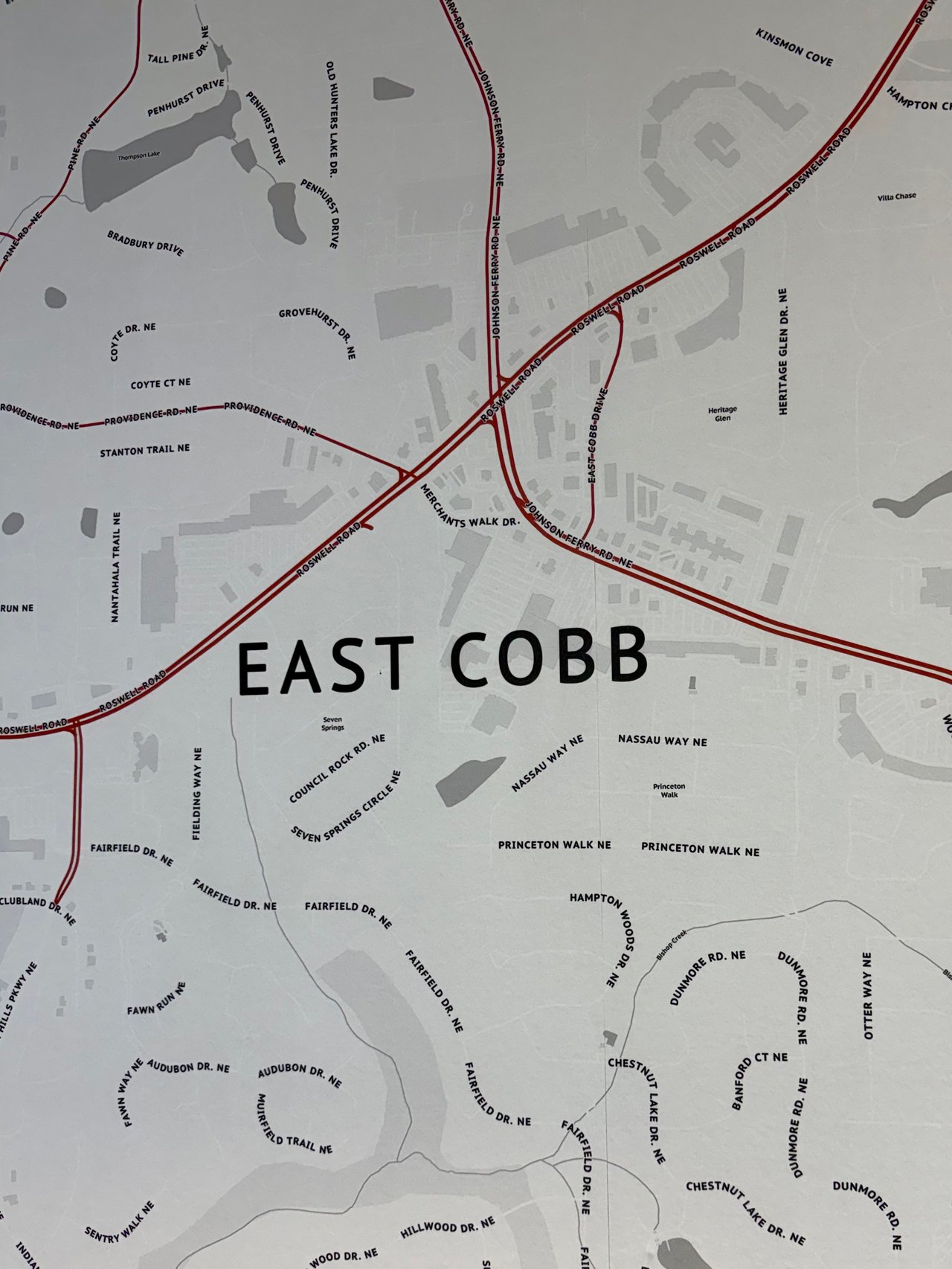
Here's the short version: the "Marietta" on your envelope is a postal convention. It has nothing to do with where the city of Marietta's authority actually starts and stops. Most of East Cobb sits outside Marietta's municipal boundary entirely, in unincorporated Cobb County, and that distinction changes your tax bill, your school assignment, and who shows up if you call 911. If you're comparing homes in East Cobb against homes inside Marietta's actual city limits, the address on the mailbox is the least useful piece of information you have.
East Cobb has stayed unincorporated for decades, and it isn't an accident or an oversight. In May 2022, Cobb County residents voted on whether to incorporate East Cobb as its own city, complete with its own police and fire departments. The measure failed decisively, with roughly 73% of East Cobb voters opposed according to unofficial results reported that week. Part of the debate at the time centered on service capacity: county officials pointed out that the proposed city limits contained only two fire stations, compared to six in Marietta and five in Smyrna, a gap that fed skepticism about whether a new city government could actually deliver what it promised.
That vote settled the question for the foreseeable future. East Cobb remains part of unincorporated Cobb County, governed by the county commission rather than a city council, and there's no active effort working its way through the legislature to change that. If you're buying with an eye toward how this area might be governed five or ten years from now, plan around the boundary as it exists today, not a hypothetical city that voters have already rejected once.
Here's where most comparisons go wrong. Buyers assume the financial gap between "East Cobb" and "Marietta" is dramatic, because one has a city government layered on top and the other doesn't. In practice, the millage difference is almost beside the point.
| Tax district | Most recently published combined rate | What's layered in |
|---|---|---|
| Unincorporated Cobb (East Cobb) | 30.13 mills | County general fund, county fire district, Cobb County Schools |
| City of Marietta | 31.122 mills | County school portion, plus Marietta's own city millage and Marietta City Schools |
| Smyrna | 36.15 mills | County school portion, plus Smyrna's city millage |
| Kennesaw | 39.28 mills | County school portion, plus Kennesaw's city millage |
Cobb County's Board of Commissioners voted on July 28, 2026 to hold its 2026 millage rate unchanged from the prior year, so the unincorporated total above still reflects what East Cobb homeowners are paying this year. Marietta's own published millage rate table is the source for the city's most recent total.
Run the math on a typical home and the gap between unincorporated Cobb and Marietta proper comes out to roughly one mill, which translates to somewhere in the neighborhood of $150 to $200 a year on a $400,000 to $500,000 home. That's not nothing, but it's not the number that should be driving a decision between two similarly priced houses on either side of the line.
The bigger swing isn't the millage rate. It's the exemption stack, and which one you qualify for depends entirely on which side of the boundary your home sits on.
On a $400,000 home in unincorporated Cobb, the assessed value comes to $160,000 under Georgia's 40 percent assessment ratio. At the 30.13 mill unincorporated rate, that produces a gross bill of roughly $4,821 before any exemptions. Once you apply the standard basic homestead exemption together with Cobb County's own floating homestead exemption, that same bill drops to approximately $3,300. That's a reduction of over $1,500, nearly a third of the starting bill, and it dwarfs the millage gap between East Cobb and Marietta entirely.
Marietta homeowners have a parallel version of this. The city offers its own $4,000 regular homestead exemption for owner-occupied homes inside city limits, stacked on top of the state's baseline exemption, which East Cobb properties simply don't have access to because that exemption only applies within the city's tax district.
There's a structural reason both exemption programs still exist and look the way they do. In 2024, the Georgia legislature passed HB 581, a statewide floating homestead exemption that caps how fast a home's taxable value can grow. Local governments got the option to opt out if they already offered something better. Cobb County, the City of Marietta, and Marietta City Schools all chose to opt out of the new law, arguing that their existing floating exemptions already gave homeowners a stronger benefit. The practical result is that both East Cobb and Marietta homeowners are still working under locally designed exemption structures rather than the state's newer cap, and neither structure resets just because you cross the city line.
If you're 62 or older on January 1 of the tax year, there's a bigger lever than either of the exemptions above. Cobb County residents who qualify get a full exemption from the county school general and school bond portion of their bill. That portion, roughly 18.70 of the 30.13 mills in unincorporated Cobb, represents well over half the total tax bill. For a homeowner planning to downsize or move within East Cobb after 62, that single exemption is worth far more over time than any millage difference between neighborhoods you're comparing.
This matters for a specific kind of client we work with often: someone who has built substantial equity in a larger East Cobb home and is weighing whether to move into a smaller place nearby, stay put, or relocate into a different part of Cobb County entirely. The senior school exemption changes that math meaningfully, and it's worth running before you assume a smaller home automatically means a smaller bill.
If you're relocating from outside Georgia and someone has told you a "rural-feeling" edge of East Cobb might qualify for USDA zero-down financing, it won't. The entire footprint of Cobb County sits inside USDA's ineligible zone, regardless of how far you are from Marietta Square or how much land surrounds the house. That boundary follows the county line, not city limits, and it doesn't bend for the parts of East Cobb that feel more suburban than urban.
The Marietta address on a listing tells you almost nothing about which government you're dealing with. Before you get attached to a property, confirm these directly rather than assuming from the mailing address:
Does a Marietta mailing address mean I'm zoned for Marietta City Schools? No. Zoning follows the actual city or county school district boundary, not the postal address. Most East Cobb homes with Marietta addresses are zoned to Cobb County Schools rather than the separate Marietta City Schools system.
Will East Cobb try cityhood again? There's no active legislative effort underway as of this writing. The 2022 referendum failed by a wide enough margin that a near-term repeat attempt looks unlikely, though Georgia's legislature has revived similar bills before after a period of dormancy.
Is it worth choosing a home based on the millage rate alone? Not on its own. The gap between unincorporated Cobb and neighboring cities is real but modest. Homestead exemptions, your age, and how long you plan to stay will usually move your actual bill more than the base millage rate does.
If you're comparing a home in East Cobb against one just across the line in Marietta, Smyrna, or Kennesaw, the tax and school implications are worth running before you fall in love with a floor plan. That's the kind of groundwork we do with every buyer we work with, whether you're moving up within East Cobb or relocating into Metro Atlanta for the first time. Cheever Home Group can walk through the exact numbers for any property you're considering. Get in Touch when you're ready to start comparing real addresses instead of postal ones.






With more than 40 years of combined experience, deep local expertise, and a client-first approach, Cheever Home Group delivers personalized guidance, skilled negotiation, and proven results throughout every stage of your real estate journey.